
Plant Care Guides › Snake Plant Care
Snake plant, also called mother-in-law’s tongue, is a succulent with stiff, upright, banded leaves that grow from a thick rhizome. Its botanical name has changed: the New York Botanical Garden notes that the plants long known as Sansevieria have been reclassified into Dracaena after molecular study, so the common snake plant, long sold as Sansevieria trifasciata, is the same species now called Dracaena trifasciata, and the cylindrical snake plant is Dracaena angolensis. Plant labels may still use either name (University of Georgia Extension). Snake plants handle dry air and missed waterings well; the New York Botanical Garden notes that too much water is the most frequent cause of failure. This guide covers light, water, soil, temperature and feeding, with a short guide to common problems. Where care guides disagree, we show both views.
Snake plant care at a glance
- Light: bright, indirect light is best; tolerates low light but grows slowly there; sources differ on direct sun (see Light)
- Water: water thoroughly, then let the soil dry before watering again; water much less in fall and winter; keep water out of the center of the rosette
- Soil and pot: a fast-draining mix, such as a cactus mix or potting soil with sand or perlite, in a pot with a drainage hole; a heavy pot helps tall plants stay upright
- Temperature: 65 to 80°F is ideal (New York Botanical Garden); keep above 55°F and away from cold drafts
- Humidity: average household humidity is fine
- Feeding: light: half-strength liquid fertilizer about once a month during the growing season, or none
- Pet safety: toxic to dogs and cats (ASPCA)
- Difficulty: easy, as long as it isn’t overwatered
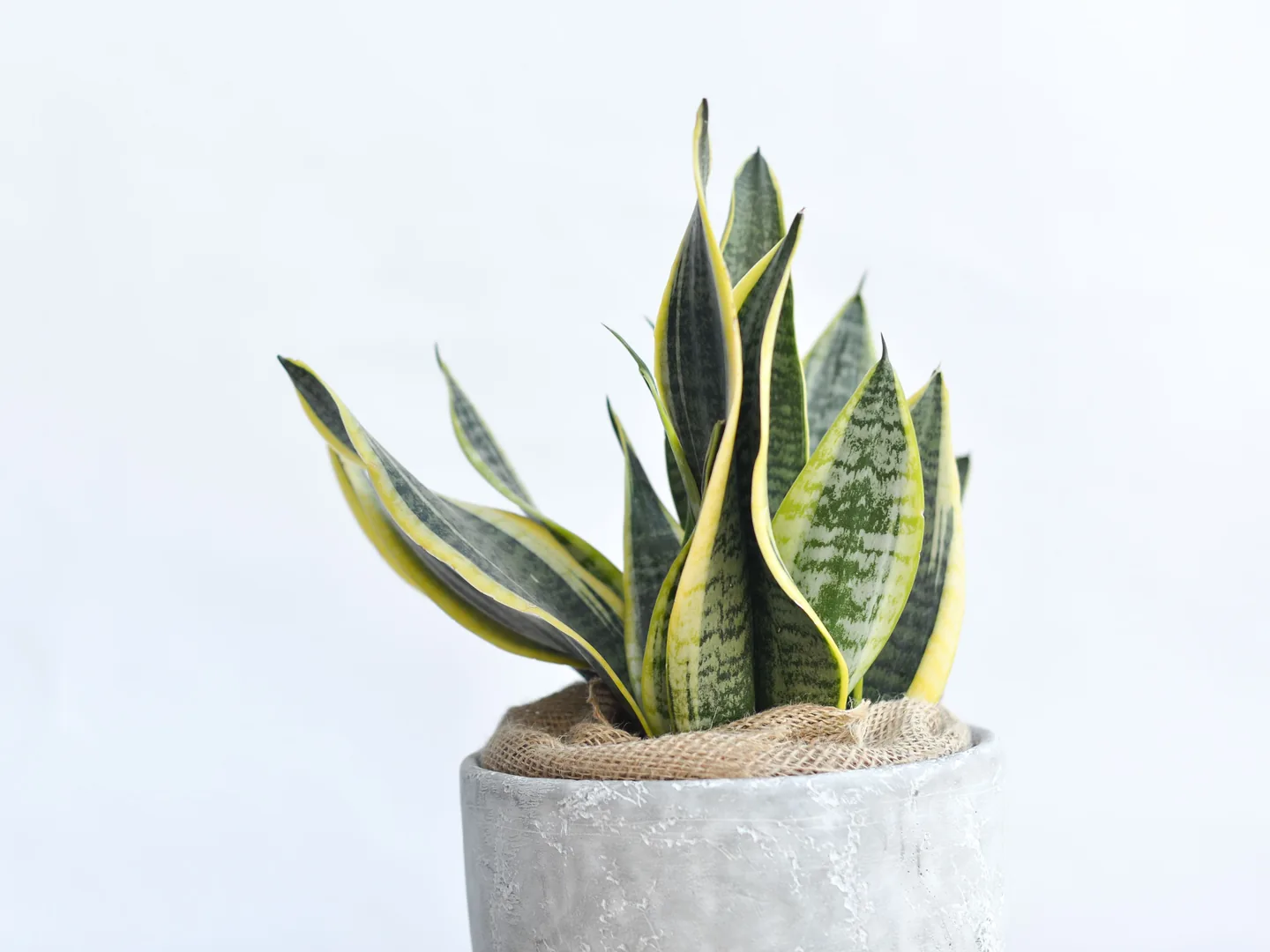
Photo: Rosa Stone, Pexels License, via Pexels (cropped and resized)
Light
Snake plants tolerate low light, but they grow best with more. Clemson Extension and Penn State Extension call bright, indirect light ideal, and Colorado State University Extension suggests medium to bright indirect light, noting that markings and variegation are less pronounced in lower light. The New York Botanical Garden notes that snake plants survive poor light but won’t grow without moderate sunlight or flower without more generous sun, and University of Maryland Extension, in an answer about a leaning snake plant, notes that they thrive with moderate light even though they tolerate low light. University of Connecticut’s Home and Garden Education Center warns that plants kept in the darkest corner can hang on for months and then decline.
Sources differ on direct sun. The New York Botanical Garden notes that snake plants prefer plentiful sunlight but should be protected from the hottest southern sun in summer; NC State Extension suggests direct sun for only part of the day, 2 to 6 hours; and University of Illinois Extension and Iowa State University Extension say the plant grows in light from dim or low to full or direct sun. On the other side, Penn State Extension advises keeping it out of direct sun, which can burn it; Clemson Extension advises avoiding direct and hot sun; and Missouri Botanical Garden advises protecting it from hot afternoon sun. What they agree on is avoiding sudden changes: the New York Botanical Garden warns not to move a snake plant from a shady spot straight into bright sun, or it will scorch.
Watering
Overwatering is the main risk. The New York Botanical Garden and University of Illinois Extension call it the most frequent reason snake plants fail, and Penn State Extension notes that root rot is common as a result. The plant stores water in its thick leaves and can handle missed waterings (Mississippi State University Extension).
Sources differ on how dry the soil should get during the growing season. The New York Botanical Garden suggests letting it just dry between waterings, Colorado State University Extension suggests watering thoroughly and then letting it dry slightly, and University of Illinois Extension and Mississippi State University Extension let it dry completely. In an answer about a snake plant, University of Maryland Extension suggests waiting until at least the top inch has dried. Clemson Extension gives every 2 to 4 weeks as a typical growing-season interval, noting that plants in more light need water more often.
Water much less in fall and winter. Sources give different intervals, which are examples rather than schedules: the New York Botanical Garden says to water only often enough to keep the leaves from puckering, and no more than every two weeks; Clemson Extension suggests every 4 to 6 weeks; and NC State Extension every one to two months. Before you water, check that the soil is dry and the leaf bases are firm; a soft base usually points to rot, not thirst, and the New York Botanical Garden notes that cold winter drafts can also cause rot (see soft leaves and rot).
Water the soil, not the plant: Missouri Botanical Garden and Colorado State University Extension advise against pouring water into the center of the rosette. The New York Botanical Garden suggests checking back after about 15 minutes and emptying any water left in the saucer.
Soil and pots
Use a fast-draining mix. Penn State Extension and Mississippi State University Extension suggest a cactus or succulent mix; the New York Botanical Garden suggests potting soil with one-third sand or perlite and up to one-third peat added. In an answer about a snake plant, University of Maryland Extension advises avoiding mixes sold for extra moisture retention, which can stay too wet. Use a pot with a drainage hole (Penn State Extension; Mississippi State University Extension).
Tall snake plants can tip over. Penn State Extension suggests a heavy pot for taller types, and Missouri Botanical Garden notes that clay pots wider than they are high help keep the plant stable, and Colorado State University Extension that clay or ceramic pots provide stability. The roots can also break pots: Penn State Extension notes that a root-bound plant can crack a clay pot, and the University of Connecticut’s Home and Garden Education Center, for that reason, prefers plastic pots, or a plastic pot set inside a heavier one.
Snake plants don’t need frequent repotting. The New York Botanical Garden notes that they like to be root-bound and can stay in the same pot for several years, with some surface soil replaced each year, and Penn State Extension suggests fresh potting mix about every five years. Repot when the plant runs short of room, and don’t move up too many pot sizes at once (University of Arkansas Extension).
Temperature and humidity
The New York Botanical Garden gives 65 to 80°F as ideal and advises keeping the plant above 55°F; University of Connecticut’s Home and Garden Education Center also suggests avoiding anything below 55°F, while NC State Extension notes that the plant tolerates cool temperatures around 50°F. Keep it away from cold drafts and chilly windows in winter (Mississippi State University Extension); the New York Botanical Garden notes that cold winter drafts can cause rot and sudden plant death. You can move a snake plant outdoors for the summer once night temperatures stay above 55°F, but keep it in bright shade or filtered sun, because direct afternoon sun scorches the leaves (Mississippi State University Extension; Missouri Botanical Garden suggests shady outdoor spots). Make any move into brighter light gradual: the New York Botanical Garden warns that a snake plant moved from shade into bright sun will scorch. Bring it back in each fall (University of Arkansas Extension).
Humidity isn’t a concern. The New York Botanical Garden calls average household humidity adequate, and University of Georgia Extension notes that snake plants are adapted to the low humidity of homes.
Feeding
Snake plants need little fertilizer. The New York Botanical Garden suggests a liquid fertilizer at half strength once a month during the growing period only, and in an answer about a snake plant, University of Maryland Extension suggests the same from about May to September. A 1999 University of Arkansas Extension column notes that fertilizing snake plants seems optional, at least indoors. In an answer about an ailing snake plant, University of Maryland Extension notes that avoiding too much fertilizer, especially nitrogen, helps keep the leaves upright.
Propagation
Snake plants spread by rhizomes and can be divided when repotting (Colorado State University Extension; Penn State Extension). Leaf pieces will also root, but variegated types such as the yellow-edged ‘Laurentii’ may not come true: Iowa State University Extension notes that leaf cuttings may produce plain green leaves, and University of Arkansas Extension that variegated forms must be divided to keep their pattern.
Flowers
Indoor snake plants rarely bloom (NC State Extension; University of Georgia Extension). Mature plants sometimes send up a tall stalk of small, fragrant, greenish-white flowers that can drip sticky nectar (Mississippi State University Extension). The New York Botanical Garden notes that a snake plant is most likely to flower with ideal care and generous sun, and that a very pot-bound plant in good conditions might also bloom.
Common problems
These are short summaries; check the signs before you change anything. Visual signs are clues, not proof of a cause, and with snake plants the most common mistake is adding water to a plant that already has too much.
Brown tips and brown edges
Snake-plant-specific evidence on brown tips is limited. In an answer about a snake plant, University of Maryland Extension notes that brown edges on older leaves are a normal part of aging and can’t heal; the leaves can be cut off when they get too worn. Physical damage and sun can also mark leaves: the New York Botanical Garden notes that a broken leaf tip may stop the leaf from growing, and that a plant moved suddenly from shade into bright sun will scorch. For houseplants in general, Clemson Extension lists hot, dry air, improper watering, insect feeding and salt buildup as causes of brown tips and margins; unlike many houseplants, snake plants don’t need extra humidity (see humidity). Brown tips alone don’t confirm a cause.
Brown spots
Several causes can look alike. In two answers about snake plants, University of Maryland Extension judged one plant’s spots to be a leaf disease that can follow prolonged wet leaves, and advised pruning the worst leaves, giving bright light and watering at soil level to keep the leaves dry; it found no sign of disease or insects on another plant’s small brown spots, called the problem environmental, and said bruising was possible, though it couldn’t say exactly what caused them. A 1991 University of Florida IFAS Extension guide for commercial growers describes red leaf spot, a fungal disease that infects the central whorl of leaves when it stays wet, as sunken, reddish-brown lesions, often with a yellow border. Cold also leaves marks: the same commercial guide notes whitish, water-soaked areas 1 to 4 weeks after cold injury, and the American Phytopathological Society notes white, sunken lesions up to a month after exposure to about 36 to 46°F (2 to 8°C). Spots alone don’t confirm a cause.
Yellow leaves
Yellow edges are normal on varieties such as ‘Laurentii’ (NC State Extension; Penn State Extension). For houseplants in general, Clemson Extension notes that when the entire plant yellows, the most common cause is overwatering. Check the soil and the leaf bases before you water. For each cause and its fix, see snake plant yellow leaves.
Curling, folding or flopping leaves
The New York Botanical Garden notes that folding and flopping leaves are very common on snake plants and point to overwatering or too little sun while the plant is growing. In winter, the New York Botanical Garden and University of Illinois Extension suggest watering just enough to keep the leaves from puckering or shriveling, so those signs can mean the soil has stayed dry too long. Some varieties, such as ‘Twisted Sister’, twist naturally (NC State Extension). Before you water, check that the soil is dry and the leaf bases are firm: for houseplants in general, Iowa State University Extension notes that root rot is commonly mistaken for lack of water. More in our guide to snake plant leaves curling.
Leaning or falling over
The New York Botanical Garden notes that overwatering, especially in winter, leads to rot and capsizing leaves. In an answer about a leaning snake plant, University of Maryland Extension pointed to too little light, rotted roots that no longer anchor the plant, and a light plastic pot, and suggested more light, a quarter turn every week or so, and a heavier pot. Check the roots if the plant is loose in its pot.
Soft or mushy leaves and rot
Clemson Extension notes that snake plants watered too often can develop root rot and soggy leaves, and the New York Botanical Garden that cold winter drafts can also cause rot. Stop watering and check the roots: for houseplants in general, Iowa State University Extension notes that healthy roots are firm while rotted roots are mushy (often brown or reddish), and that rot is often mistaken for lack of water. Root color varies, so judge firmness as well as color. For houseplants in general, Clemson Extension suggests that if only a few roots are infected, you cut them out and repot in sterile soil, and notes that if most roots are dark, soft and dead, it is better to discard the plant.
Pests
Snake plants have few pests. NC State Extension, Penn State Extension and Missouri Botanical Garden suggest watching for mealybugs and spider mites. For houseplants in general, Clemson Extension suggests controlling light mealybug infestations by wiping the insects with a cotton swab dipped in rubbing alcohol; UC Statewide IPM advises 70% or weaker alcohol, tested on a small part of the plant one to two days first, and cautions that rubbing alcohol is flammable. It also notes that mealybugs on succulents can hide in tight spots such as inside the leaf bases. Fungus gnats, which breed in wet potting soil, are a sign of overwatering (Iowa State University Extension, houseplants in general).
Is snake plant safe for pets and people?
Pets: no. The ASPCA lists snake plant (under its older name for the same species, Sansevieria trifasciata) as toxic to dogs and cats because of saponins, with nausea, vomiting and diarrhea as signs. If you think your pet has eaten some, call your veterinarian or the ASPCA Animal Poison Control Center at (888) 426-4435.
People: NC State Extension rates the poison severity to people as low, and University of California Agriculture and Natural Resources lists snake plant among plants of minor toxicity that may cause vomiting or diarrhea if eaten, and whose sap can irritate the skin. Keep it out of reach of young children, and if someone eats part of the plant, call Poison Control (in the US) at 1-800-222-1222 or your doctor (University of California Agriculture and Natural Resources).
Frequently asked questions
How often should I water a snake plant?
There is no fixed schedule. Water thoroughly when the soil has dried; Clemson Extension gives about every 2 to 4 weeks in the growing season as a typical interval, more often in brighter light, and much less in fall and winter. Check the soil and the leaf bases first (see Watering).
Can a snake plant live in a dark room?
It can tolerate low light for a while, but it won’t thrive there. The New York Botanical Garden notes that snake plants won’t grow without moderate sunlight, and University of Connecticut’s Home and Garden Education Center that plants in the darkest corner eventually run out of stored resources.
Is snake plant a Sansevieria or a Dracaena?
Both names are in use. Botanists have moved Sansevieria into Dracaena based on DNA studies (New York Botanical Garden; Clemson Extension), so the snake plant is now Dracaena trifasciata, but many plant labels still use Sansevieria (University of Georgia Extension), and so does the ASPCA.
Why is my snake plant falling over?
Overwatering and too little light are common causes (New York Botanical Garden; University of Maryland Extension). Check the soil and roots, move the plant to brighter indirect light, and use a heavier pot for tall plants (Penn State Extension).
Sources
- New York Botanical Garden, Mertz Library: Snake Plant (Dracaena) (plant guide, 2026).
- Missouri Botanical Garden: Dracaena trifasciata (Plant Finder).
- NC State Extension Gardener Plant Toolbox: Dracaena trifasciata.
- Penn State Extension: Snake Plant: A Forgiving, Low-Maintenance Houseplant (2023).
- University of Illinois Extension: Mother-in-law’s tongue.
- Mississippi State University Extension: Sansevieria: a stylish houseplant for everyone (2026).
- Colorado State University Extension, PlantTalk Colorado: Snake Plant (#1337).
- Clemson Cooperative Extension, Home & Garden Information Center: Exciting Houseplant Selections for Beginners (2025); Houseplant Diseases & Disorders and Common Houseplant Insects & Related Pests (houseplants in general).
- Iowa State University Extension and Outreach: Easy Low-Maintenance Houseplants; Root Rots of Houseplants and Diagnosing Houseplant Problems Caused by Insect Pests (houseplants in general).
- University of Georgia Extension, Forsyth County: Snake plant: a striking and durable houseplant (2023).
- University of Connecticut Home and Garden Education Center: Sensational Sansevieria (2024).
- University of Arkansas Cooperative Extension: Sansevieria (2018); Mother-in-Law’s Tongue, Plant of the Week (1999).
- University of Maryland Extension, Home and Garden Information Center: answers on Ask Extension about snake plants, a leaning plant (2020), an ailing plant (2026), brown spots (2024) and small brown spots (2018).
- University of Florida IFAS Extension: Sansevieria, Foliage Plant Note RH-91-30 (1991, for commercial growers; archived).
- American Phytopathological Society: Temperature (APSnet Education Center).
- UC Statewide IPM Program: Houseplant Problems (Pest Notes 74172; houseplants in general).
- ASPCA Animal Poison Control: Snake Plant.
- University of California Agriculture and Natural Resources: Safe and Poisonous Garden Plants: Toxic Plants.
