
Plant Care Guides › Peace Lily Care
Peace lily (Spathiphyllum) is a tropical understory plant with glossy, dark green leaves and white “flowers” that are really a hooded spathe around a spike of tiny flowers. Despite the name, it is not a true lily: Clemson Extension notes that it belongs to the aroid family (Araceae), with anthuriums and callas. Clemson calls peace lilies sturdy and easy to grow, and one of the few foliage plants that will flower in low light. This guide covers light, water, soil, temperature, feeding and flowering, with a short guide to common problems. Where care guides disagree, we show both views.
Peace lily care at a glance
- Light: bright, indirect light is best; tolerates low light but flowers less; no direct sun (see Light)
- Water: keep the mix evenly moist but never soggy, letting the top dry slightly between waterings; never let the pot sit in water
- Soil and pot: a well-drained potting mix rich in organic matter, in a pot with a drainage hole; repot only one or two inches larger (Clemson Extension)
- Temperature: 68 to 85°F by day, up to about 10°F cooler at night (Clemson Extension; NC State Extension); avoid cold drafts
- Feeding: very little; sources range from a low dose three times a year to quarter-strength every six to eight weeks, or monthly, in spring and summer
- Flowers: on plants about a year old or more, in enough light
- Pet safety: toxic to cats and dogs (ASPCA), but not one of the true lilies that cause kidney failure in cats
- Difficulty: easy
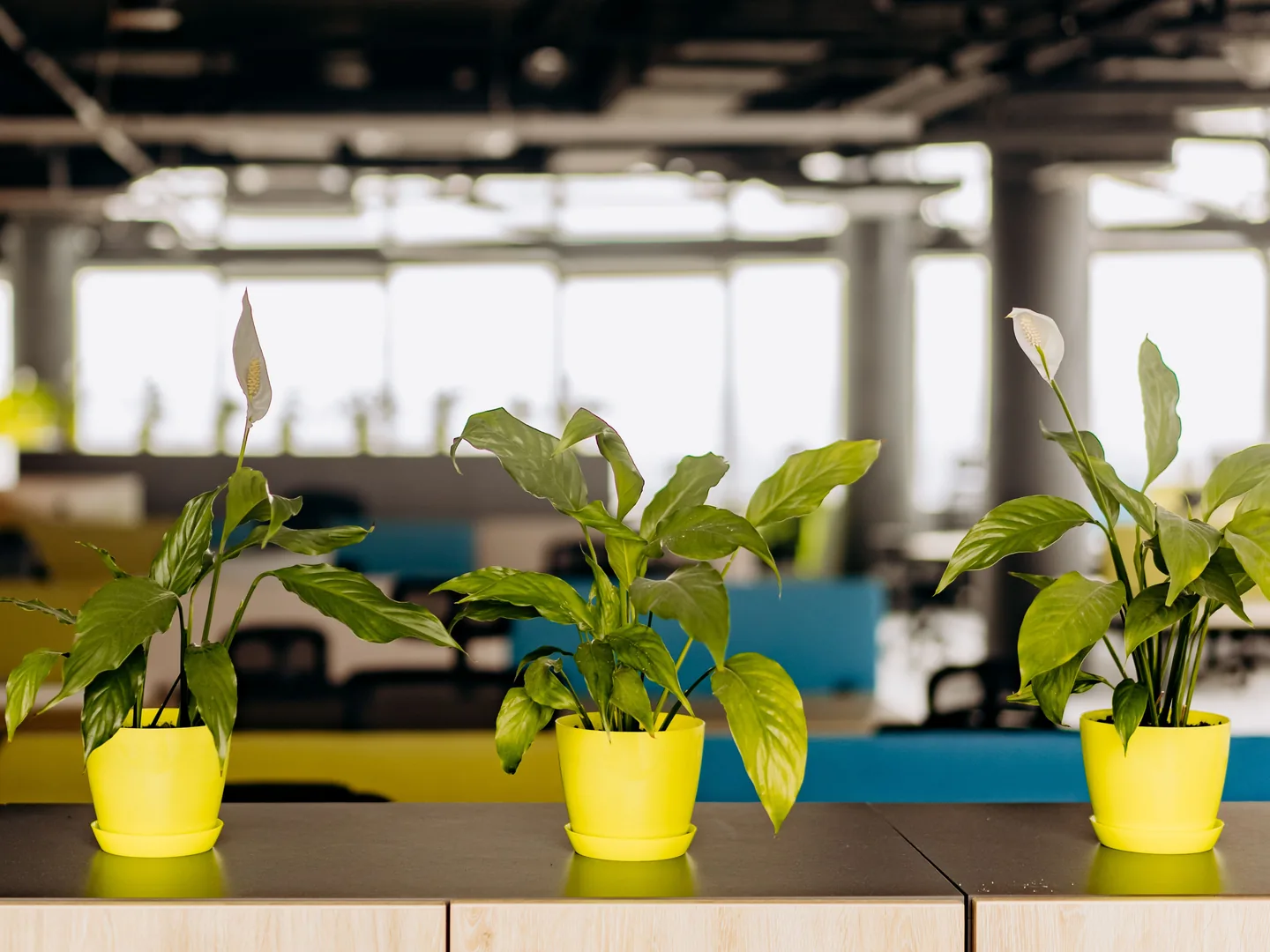
Photo: Mikhail Nilov, Pexels License, via Pexels (cropped and resized)
Light
Clemson Extension notes that peace lilies tolerate low light but grow best in bright, indirect light, and that direct sun scorches the foliage. South Dakota State University Extension suggests an east-facing window with morning light or a north window, and University of Florida IFAS Extension calls for bright, indirect light with no direct sun.
Sources differ on how dim is acceptable. NC State Extension notes that peace lilies prefer partial to deep shade, and Missouri Botanical Garden that they do well in lower light but prefer bright, filtered light. The difference shows in flowering: Iowa State University Extension notes that peace lilies grow in low light but flower best in indirect sunlight, and a 1999 University of Arkansas Extension column suggests a spot bright enough to read a newspaper if you want blooms. In an answer about a peace lily with browning leaves, University of Maryland Extension noted that the plant’s very long leaf stems and lack of fullness suggested too little light.
Watering
Clemson Extension advises keeping the mix moist but not soggy and letting it dry out slightly between waterings, and NC State Extension and Missouri Botanical Garden advise letting it dry between waterings. In answers about individual peace lilies, University of Maryland Extension notes that they prefer to stay more evenly moist than most houseplants, though not soggy, and suggests feeling the soil about an inch down and watering once it is somewhat dry to the touch at that depth; another of its answers notes that they are more damp-tolerant than dry-tolerant but have their limits.
Never let the pot sit in water: Clemson Extension notes that a saucer of standing water leads to root rot, and South Dakota State University Extension that it causes root problems. Empty the saucer after watering. NC State Extension and Missouri Botanical Garden note that peace lilies grow well with watering from below. Either way, in an answer about a peace lily, University of Maryland Extension advises emptying the saucer promptly so the water doesn’t soak back into the pot and keep the lower soil wet.
Peace lilies are known for drooping when dry, and sources differ on using that as a signal. University of Maryland Extension notes that peace lilies will wilt when they need water, though plants can also wilt when overwatered, and Iowa State University Extension that the leaves revive after watering. Missouri Botanical Garden advises against letting the plant wilt, and University of Florida IFAS Extension, in a guide for commercial growers, notes that frequent drooping leads to brown tips and edges. Don’t water by the droop alone: feel the mix first, and if it is still wet, check the roots instead (see root rot).
Water quality: South Dakota State University Extension and Missouri Botanical Garden suggest room-temperature water that has stood long enough for chlorine to evaporate. Fluoride is a separate question: in individual answers, University of Illinois and University of Maryland Extension experts note that peace lilies appear to be sensitive to fluoride in tap water, and letting water stand does not remove fluoride (Missouri Botanical Garden, general watering guide). Avoid softened water, which adds sodium (Clemson Extension, general).
Soil and repotting
Clemson Extension notes that peace lilies flourish in almost any well-drained potting mix, and NC State Extension suggests a mix high in organic matter. The pot needs a drainage hole; for houseplants in general, Iowa State University Extension notes that a layer of gravel in the bottom does not make up for the lack of one.
Peace lilies like a slightly snug pot. Clemson Extension suggests repotting when roots grow through the drainage holes or circle on the soil surface, into a container only one to two inches larger, because too large a pot can keep the mix too wet and lead to root rot. NC State Extension and Missouri Botanical Garden note that the plant needs a large pot but should be kept somewhat pot-bound, and advise repotting if needed in February or March, while Clemson Extension notes that you can repot at any time, with quicker recovery during the growing season. In an answer about a struggling peace lily, University of Maryland Extension notes that old potting mix can build up salts and drain poorly, and asks whether the plant has had fresh mix in the past year or two.
Temperature and humidity
Clemson Extension and NC State Extension give 68 to 85°F by day, with nights about 10°F cooler (Clemson) or no more than 10°F cooler (NC State); University of Florida IFAS Extension’s commercial guide suggests a 5°F drop. Sources differ on the cold limit: Clemson Extension advises avoiding temperatures below 60°F to prevent cold damage, South Dakota State University Extension advises avoiding 55°F or lower, and NC State Extension notes that temperatures of 40 to 60°F slow growth considerably and that long periods below 40°F can damage leaves, stems and roots. Some cultivars are more sensitive: University of Florida IFAS Extension’s commercial guide notes injury from cold, drafts or long periods below 45°F, with tolerance varying by cultivar (see brown or black spots). Keep the plant away from heating and air-conditioning vents and cold drafts (Clemson Extension).
Humidity: NC State Extension and South Dakota State University Extension list low humidity among the causes of brown leaf tips, while Iowa State University Extension’s short peace lily note suggests below-average humidity levels. For indoor plants in general, Iowa State University Extension notes that misting does not raise the humidity around a plant and can spread disease, and that grouping plants together is one of the easiest ways to raise it.
Feeding
Peace lilies need very little fertilizer, and sources differ on how often. Clemson Extension suggests a balanced liquid houseplant fertilizer at one-quarter strength every six to eight weeks during spring and summer; NC State Extension and Missouri Botanical Garden also suggest quarter strength; University of Florida IFAS Extension suggests a low dose three times a year; and a 1999 University of Arkansas Extension column suggests monthly feeding in spring and summer. Clemson Extension, NC State Extension and Missouri Botanical Garden note that overfeeding can burn the leaf tips and roots, and NC State suggests flushing the soil between feedings. For houseplants in general, Iowa State University Extension advises feeding only when plants are actively growing.
Flowers
Clemson Extension notes that a lack of flowers usually means the plant is less than a year old or is growing in too little light. The white spathe turns pale green as it ages (Clemson Extension; NC State Extension), which is normal; NC State notes that blooms stay white for about 10 days and then remain attractive for at least another month. University of Florida IFAS Extension’s commercial guide advises trimming dead blooms and leaves as soon as possible.
Plants often come from the store in bloom because commercial growers can trigger flowering with a gibberellic acid spray (University of Florida IFAS Extension, commercial guides). In University of Florida IFAS Extension’s research for growers, most cultivars flowered only in spring and early summer once they reached blooming age, and no types that respond to day length were confirmed. NC State Extension notes that peace lilies have no specific bloom time but flower freely.
Cleaning and trimming
The wide leaves collect dust. Clemson Extension, NC State Extension and University of Florida IFAS Extension suggest wiping them with a soft, damp cloth, and NC State adds that this removes some pests from the undersides. Sources differ on leaf shine: a University of Florida IFAS guide for commercial interiorscapes suggests an occasional light spray of leaf polish, while Iowa State University Extension, for houseplants in general, notes that large amounts and frequent applications of shine products can clog leaf pores and collect dust, and suggests a damp cloth or gentle shower instead. In an answer about a peace lily, University of Maryland Extension notes that occasional dieback of older leaves is normal and that yellow or brown leaves can be trimmed off near the base of the leaf stalk.
Propagation
Peace lilies are propagated by division (NC State Extension; Iowa State University Extension); University of Florida IFAS Extension suggests dividing in spring.
Common problems
These are short summaries; check the signs before you change anything. Visual signs are clues, not proof of a cause.
Drooping
Feel the mix before you water a drooping peace lily. If it is dry, the plant often perks up after watering (Iowa State University Extension). University of Florida IFAS Extension’s commercial guide notes that plants may also droop late in the day in bright light and heat even when the mix is moist. If the mix is wet and the plant still droops, the roots may be damaged: for houseplants in general, Clemson Extension notes that root injury causes wilting and that watering then may make the problem worse. Our guide to a drooping peace lily goes through each cause.
Yellow leaves
South Dakota State University Extension notes that yellow leaves can come from either overwatering or underwatering, and that older leaves yellow when a plant has not been repotted in a while; Clemson Extension notes that letting the soil dry out excessively makes the plant wilt and the leaves and edges turn yellow. An occasional yellowing older leaf is normal (University of Maryland Extension, in an answer about a peace lily). Feel the mix before you act: if it is wet, check the roots rather than adding water (see root rot). For each cause and its fix, see peace lily yellow leaves.
Brown tips
NC State Extension lists excessive direct sun, underwatering and low humidity as causes of brown leaf tips, and South Dakota State University Extension adds over-fertilizing. Clemson Extension notes that leaf edges can brown from overfertilization or from drying out too much. For houseplants in general, Iowa State University Extension notes that trimming off brown portions improves the look for a while, but new browning appears if the cause isn’t fixed. More on peace lily brown tips, cause by cause.
Curling leaves
Curling has thin evidence for peace lilies. The only peace-lily-specific source we found, University of Florida IFAS Extension’s guide for commercial growers, links curled, pale leaves with burned margins and sparse flowers to too much light or heat, and advises moving the plant out of direct sun. For houseplants in general, Clemson Extension notes that chronic underwatering causes wilting and leaf curling, and that aphids can leave leaves misshapen. Check the light, the warmth of the spot, the soil moisture and the undersides of the leaves.
Brown or black spots
Several causes can look alike. A University of Florida IFAS Extension research summary for growers notes that chilling injury in peace lilies starts at the leaf tips and edges and turns black; in trials where plants were held at 38 or 45°F for five days, symptoms appeared within 24 hours at 38°F on one highly sensitive cultivar, and damage ranged widely between cultivars. Direct sun can scorch the leaves (Clemson Extension). Fungal leaf spot diseases are recorded on Spathiphyllum (American Phytopathological Society), but we found no peace-lily-specific description of their symptoms; for houseplants in general, Clemson Extension describes fungal spots as small brown spots with yellowish margins, and advises removing infected leaves, improving air circulation and keeping water off the leaves. Spots alone don’t confirm a cause.
Root rot and a dying plant
Clemson Extension notes that root and stem diseases are the most common peace lily problem and are usually linked to overwatering. In an answer about a peace lily, University of Maryland Extension suggests taking the plant out of the pot, trimming off roots that are black and mushy, and repotting in a container with drainage holes. For houseplants in general, University of Maryland Extension notes that root rot can make a plant wilt even when the soil is wet.
Pests
Clemson Extension notes that peace lilies have few pests, but that fungus gnats, mealybugs, spider mites and scale can be problems, and NC State Extension that mealybugs are probably the most common indoor insect. For houseplants in general, Clemson Extension suggests controlling light mealybug infestations by wiping them off with a cotton swab dipped in rubbing alcohol, and University of Maryland Extension warns not to get the alcohol on the leaves and that heavily infested plants are best discarded.
Is peace lily safe for pets and people?
Pets: no. The ASPCA lists the peace lily (Spathiphyllum) as toxic to dogs and cats because of insoluble calcium oxalates, with signs such as oral irritation, intense burning of the mouth, tongue and lips, excessive drooling, vomiting and difficulty swallowing. It is still toxic, but it is not a true lily: the ASPCA notes that severe signs are unlikely, and that because the crystals are not absorbed into the body, they don’t cause organ damage; the FDA adds that breathing problems from swelling of the mouth and airways can occur but are uncommon. The FDA lists peace lilies among the “less harmful” lilies for cats and dogs, and notes that the kidney failure lilies cause in cats comes from the true lily and daylily families (the ASPCA names Lilium and Hemerocallis), not from plants like peace lily. Keep it out of reach anyway. If you think your pet has eaten some, call your veterinarian or the ASPCA Animal Poison Control Center at (888) 426-4435.
People: the National Capital Poison Center notes that the leaves, stems and flowers contain calcium oxalate crystals that can cause immediate mouth and throat irritation if chewed or swallowed, and that most minor exploratory bites can be managed at home. If someone has eaten part of the plant, call Poison Control (in the US) at 1-800-222-1222. The Children’s Hospital of Philadelphia Poison Control Center advises going to an emergency department if swelling makes swallowing or breathing difficult.
Frequently asked questions
How often should I water a peace lily?
There is no fixed schedule. Check the mix about an inch down and water when it is somewhat dry at that depth (University of Maryland Extension, in an answer about a peace lily). For houseplants in general, University of Maryland Extension notes that plants should be watered when they need it rather than on a schedule.
Why isn’t my peace lily flowering?
Usually it is too young or in too little light (Clemson Extension). Move it to bright, indirect light, out of direct sun, and give it time: in University of Florida IFAS Extension’s research for growers, most cultivars bloomed only in spring and early summer once they reached blooming age.
Why are my peace lily’s flowers turning green?
That is normal aging: the white spathe turns pale green as it gets older (Clemson Extension; NC State Extension). Trim it off when it fades.
Can a peace lily grow in low light?
Yes, within limits. Clemson Extension notes that peace lilies tolerate low light but grow best in bright, indirect light, and that they are one of the few foliage plants that will flower in low light, though flowering is better in brighter spots (Iowa State University Extension).
Sources
- Clemson Cooperative Extension, Home & Garden Information Center: Peace Lily (HGIC 1512); Houseplant Diseases & Disorders, Indoor Plants: Watering and Common Houseplant Insects & Related Pests (houseplants in general).
- NC State Extension Gardener Plant Toolbox: Spathiphyllum.
- South Dakota State University Extension: Peace Lily: Houseplant How-To (2024).
- University of Florida IFAS Extension: Florida Foliage House Plant Care: Spathiphyllum; Peace Lily (Gardening Solutions); for commercial growers: Cultural Guidelines for Commercial Production of Interiorscape Spathiphyllum, Chilling Injury in Tropical Foliage Plants: I. Spathiphyllum and Spathiphyllum Flowering—Keys to the Future.
- Missouri Botanical Garden: Spathiphyllum (group) (Plant Finder); How to Water Indoor Plants (houseplants in general).
- Iowa State University Extension and Outreach: Easy Low-Maintenance Houseplants; How to Care for Houseplants and Diagnosing Houseplant Problems Related to Poor Culture and Diagnosing Houseplant Problems from Improper Environmental Conditions (houseplants in general).
- University of Arkansas Cooperative Extension: Peace Lily, Plant of the Week (1999).
- University of Maryland Extension, Home and Garden Information Center: answers on Ask Extension about peace lilies, a struggling plant (2024), watering and leaf dieback (2025) and damaged leaves and roots (2018); Watering Indoor Plants, Winter Indoor Plant Problems and Mealybugs on Indoor Plants (houseplants in general).
- University of Illinois Extension: answer about a peace lily (Ask Extension).
- ASPCA Animal Poison Control: Peace Lily; Top 10 Toxic Plants for Pets (2021); Internet Myths and Rumors: Pet Toxin Edition (2016).
- American Phytopathological Society: Diseases of Foliage Plants (common names list, 1993).
- U.S. Food and Drug Administration: Lovely Lilies and Curious Cats: A Dangerous Combination.
- National Capital Poison Center: Are peace lilies poisonous? (2025).
- Children’s Hospital of Philadelphia Poison Control Center: Plants That Irritate.
