
Plant Problems › Snake Plant Leaves Curling
Snake plant leaves (Dracaena trifasciata, formerly Sansevieria trifasciata) normally stand stiff and upright: NC State Extension describes them as stiff, upright and flat, and Missouri Botanical Garden notes that they rise stiffly from a thick rhizome. Leaves that curl, fold or flop are a symptom, not a diagnosis.
The snake plant guides cited here rarely use the word “curling.” The New York Botanical Garden describes folding and flopping leaves, and leaves that pucker when the plant is too dry in winter; Illinois Extension describes leaves that shrivel. Where snake plant guides are silent, this page uses Extension guidance for houseplants in general and says so. Start by checking the plant’s normal shape, then feel the potting mix, and look at its spot and its leaves before you change anything.
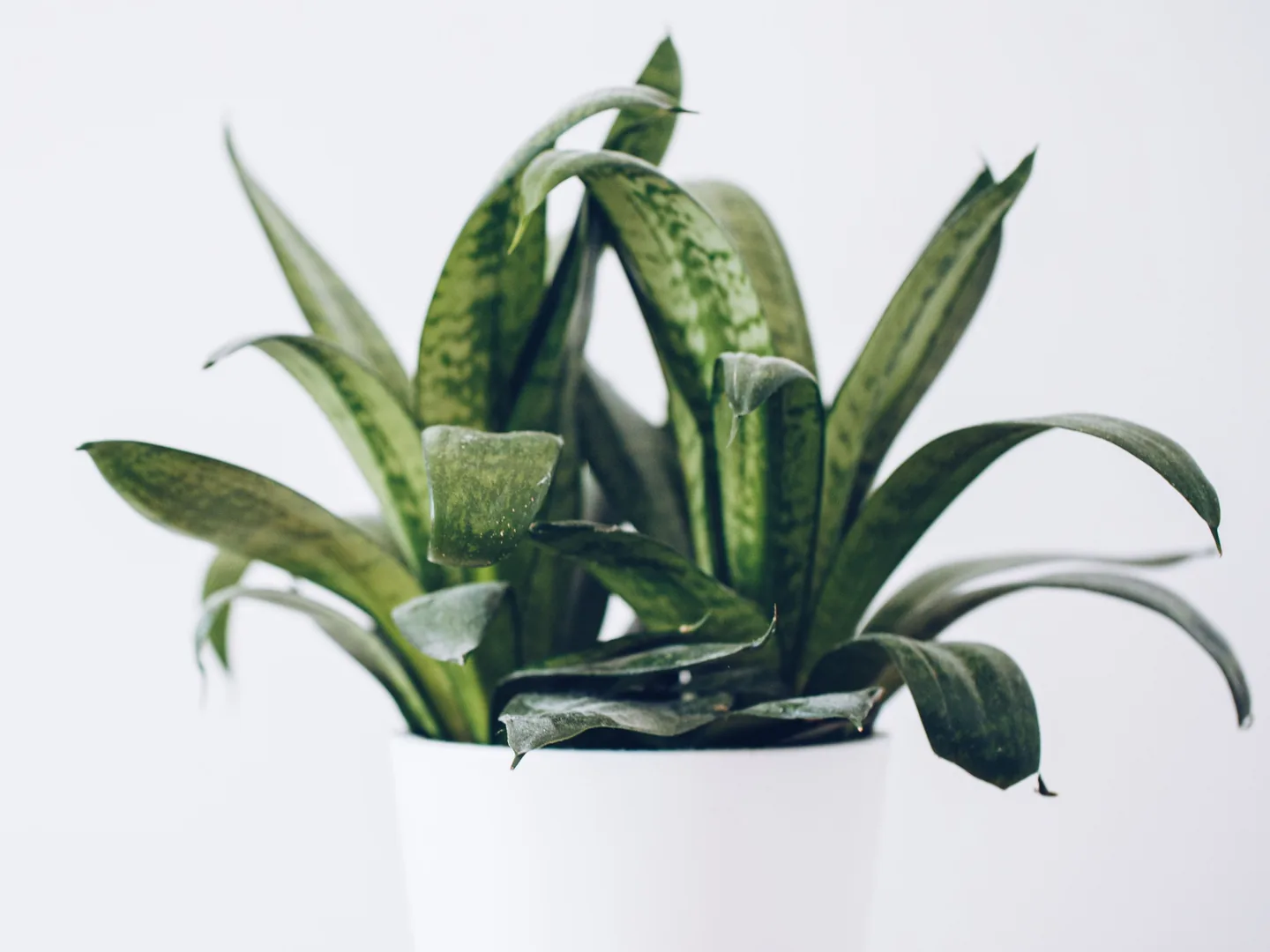
Photo: Damian Apanasowicz, Pexels License, via Pexels (cropped and resized)
First, check the plant’s normal shape
Not every snake plant grows straight, flat leaves. NC State Extension describes ‘Hahnii’ as a dwarf with a short, funnel-shaped rosette and ‘Twisted Sister’ as having a twisting leaf habit, and Clemson Extension notes that Dracaena angolensis (formerly Sansevieria cylindrica) has cylindrical leaves. A UF/IFAS guide for commercial growers notes that the first few leaves on many sansevierias grown from leaf cuttings are shorter and more bent back than mature leaves, while plants from divisions usually produce mature-looking leaves.
If the leaves have always looked this way, and the plant is a cultivar known for curved or twisting leaves or a young plant grown from a leaf cutting, the shape may be normal. Leaves that were straight and have started to fold, flop, wrinkle or curl are the kind to investigate below.
Quick answer
Causes to check:
- A cultivar known for bent or twisting leaves, or a young plant grown from a leaf cutting, whose leaves have always looked this way: may be its normal shape. Often normal
- The mix stays wet, and leaves fold, flop, lean or feel soft: possibly too much water or root rot. Check the roots: Act soon
- The mix has been bone dry for a long time, and leaves look wrinkled, puckered or shriveled: possibly too little water. Fix this week
- Leaves fold or flop in a dim spot, or show pale or scorched patches after a sudden move into strong sun: possibly a light problem. Fix this week
- A cold window, a draft or a chilly room: possible cold damage. Act soon
- Curled or distorted leaves with silvery scars, or white cottony insects at the leaf bases: possible pests. Act soon
Labels show how quickly to act if a cause is confirmed. They are not a diagnosis; check the signs in each section first.
Too much water or root rot
How urgent: Act soon A plant whose roots are rotting can collapse.
Overwatering is the problem snake plant guides warn about most. The New York Botanical Garden calls too much water the most frequent cause of failure and overwatering the most frequent problem, especially in winter, and notes that it results in rot, capsizing foliage and plant death. It also notes that folding and flopping leaves are very common on snake plants and indicate that the plant has been overwatered or isn’t getting enough sun while it is growing, often because it is kept growing through the winter instead of resting. Clemson Extension notes that snake plants can develop root rot and soggy leaves if watered too often, and Illinois Extension calls overwatering the main reason for failure.
How to tell
- The mix stays wet for days, the pot has no drainage hole, or the pot sits in water.
- Leaves fold, flop or lean, or feel soft or soggy.
- The plant wobbles or falls over. The New York Botanical Garden notes that overwatered snake plants rot easily, causing the plant to fall over. In an answer about a leaning snake plant, University of Maryland Extension’s horticulturists named too little light as one possible reason and, as another, old roots that had rotted away in compacted mix, leaving the plant poorly anchored.
- The roots are mushy. Iowa State Extension notes, for houseplants in general, that healthy roots are firm, while rotted roots are mushy. Go by firmness more than color, since root color varies.
How to fix
- Don’t water again while the mix is wet.
- Take the plant out of its pot and look at the roots and the thick rhizome. Iowa State Extension notes, for houseplants in general, that root rot is often mistaken for lack of water, so the roots and the moisture of the mix should be checked before adding more water. For houseplants in general, University of Maryland Extension advises cutting out rotten portions and replanting the healthy sections, and Clemson Extension advises that if only a few roots are infected, you cut them out and repot the plant in sterile soil. Use a clean cutting tool.
- Repot in a mix that drains well. Penn State Extension suggests a cactus mix or one with perlite, and the New York Botanical Garden suggests potting soil with one-third sand or perlite (and up to one-third peat) added. University of Maryland Extension’s horticulturists advise against mixes sold for better moisture retention, because they can stay too wet for snake plants.
- Use a pot with a drainage hole that isn’t much bigger than the roots (University of Arkansas Extension), and empty the saucer after watering (New York Botanical Garden; University of Maryland Extension). After repotting, water only when the mix has become quite dry: University of Maryland Extension’s horticulturists, in the leaning-plant answer, note that new soil and watering only when it is quite dry should promote healthy roots.
Too little water
How urgent: Fix this week
Snake plants tolerate dry spells: Mississippi State University Extension notes that they store moisture in their thick leaves, and Penn State Extension notes that they can go a month or so without water. But they can get too dry. The New York Botanical Garden advises watering in winter often enough to keep the leaves from puckering, and Illinois Extension advises watering in winter just enough to keep the foliage from shriveling. For houseplants in general, Clemson Extension notes that chronic underwatering results in wilting and leaf curling.
How to tell
- The mix has been completely dry for a long time, and the leaves look wrinkled, puckered or shriveled.
- Check the roots if the mix is not bone dry: Clemson Extension notes, for houseplants in general, that the signs of overwatering and underwatering are similar.
How to fix
- If the mix is dry all the way through and the leaf bases are firm, water thoroughly until water runs out of the drainage hole, then empty the saucer. Don’t pour water into the center of the rosette (Missouri Botanical Garden; Colorado State University Extension). If any leaf base feels soft or the plant wobbles in its pot, check the roots before watering (see too much water).
- Let the mix dry between waterings, and water much less in fall and winter. Sources differ on how dry and how often. Illinois Extension and Mississippi State University Extension suggest letting the mix dry completely; the New York Botanical Garden suggests letting it just dry during active growth, and Colorado State University Extension letting it dry slightly in spring and summer. For winter, intervals range from no more than every two weeks (New York Botanical Garden) to every four to six weeks (Clemson Extension) and every one to two months (NC State Extension). Colorado State University Extension, by contrast, advises giving just enough water in fall and winter to keep the mix from drying out completely.
- If the leaves don’t firm up after a thorough watering, check the roots (see too much water): Iowa State Extension notes, for houseplants in general, that root rot is often mistaken for lack of water.
Too little light, or a sudden move into sun
How urgent: Fix this week
Low light is the other cause the New York Botanical Garden names for folding and flopping leaves: not enough sun while the plant is in active growth. It notes that snake plants survive poor light but won’t grow without moderate sunlight. University of Maryland Extension’s horticulturists note that moderately bright light, and not too much fertilizer (mainly nitrogen), helps the leaves stay upright, and in another answer that a leaning snake plant may be short of light. A UF/IFAS guide for commercial growers notes that leaves grown in heavy shade become elongated and weak.
Too much sun at once can harm the leaves too. The New York Botanical Garden warns that moving a snake plant from a shady spot into bright sunlight will scorch it. Sources differ on direct sun: NC State Extension suggests 2 to 6 hours of direct sun, and Illinois Extension any light from a dim interior to full sun, while Penn State Extension advises keeping the plant out of direct sun, which can burn it.
How to tell
- The plant sits far from a window or in a dim corner, and the leaves are long, weak, floppy or leaning.
- The plant was recently moved into strong sun, and leaves show pale or scorched patches.
How to fix
- Move the plant to a brighter spot: Clemson Extension and Penn State Extension favor bright, indirect light, and Colorado State University Extension medium to bright, indirect light. Don’t move it straight from shade into bright sun (New York Botanical Garden); for houseplants in general, University of Maryland Extension advises getting plants used to brighter light slowly.
- Protect it from hot afternoon sun (Missouri Botanical Garden).
- Feed lightly: the New York Botanical Garden and Penn State Extension suggest half-strength fertilizer once a month during the growing season only.
Cold and drafts
How urgent: Act soon The New York Botanical Garden notes that cold winter drafts can cause rot and sudden plant death.
Snake plants don’t like cold. The New York Botanical Garden gives 65 to 80°F as ideal, advises not keeping the plant below 55°F, and notes that cold winter drafts cause rot and sudden plant death. NC State Extension notes that the plant tolerates cool temperatures around 50°F, and Mississippi State University Extension advises keeping it away from cold drafts and chilly windows in winter. The American Phytopathological Society, in a reference on chilling injury in foliage crops, notes that the snake plant was one of the first plants identified as sensitive to chilling, with white, sunken lesions developing up to a month after exposure to temperatures of about 36 to 46°F. For houseplants in general, Missouri Botanical Garden notes that curling leaves that turn brown and drop indicate that it is too cold.
How to tell
- The plant sits near a cold window or door, was moved in cold weather, or the room gets chilly at night.
- Leaves show pale, whitish or water-soaked patches, or soft spots. A UF/IFAS guide for commercial growers notes that cold-injured leaves can develop whitish, water-soaked areas one to four weeks after the exposure.
How to fix
- Move the plant to a warm spot away from cold windows, doors and drafts.
- Damage can keep appearing for up to a month after the cold (UF/IFAS guide for commercial growers; American Phytopathological Society). If leaves turn soft or the base feels mushy, check for rot (see too much water or root rot).
- Water sparingly while the plant recovers, and only when the mix is dry and the leaf bases are firm.
Pests
How urgent: Act soon Pests can spread to other plants.
Snake plants have few pests: NC State Extension lists no significant problems but advises watching for mealybugs and spider mites, and Penn State Extension notes that these occasionally bother the plant. The only snake plant source cited here that uses the word “curled” is about pests: a UF/IFAS guide for commercial growers notes that leaves infested with thrips become curled or distorted, with silver-gray scars where they fed.
For houseplants in general, Clemson Extension notes that mealybugs cause stunted and distorted growth, and the University of California’s houseplant pest guide notes that mealybugs infest succulents and can hide in tight crevices, such as inside leaf bases, and on the roots.
How to tell
- Leaves are curled or distorted and show silvery-gray scars or streaks.
- White, cottony insects sit in the leaf bases or between leaves.
- Fine light-colored speckling (stippling) or silk webbing, which the University of California’s houseplant pest guide describes as signs of spider mites.
How to fix
- Move the plant away from other plants (Clemson Extension).
- Remove mealybugs by hand, or wipe each one with a cotton swab dipped in rubbing alcohol (Clemson Extension). The University of California’s houseplant pest guide advises using alcohol of 70% or less, testing it on a small part of the plant a day or two beforehand, and taking care because it is flammable.
- For larger infestations, use an insecticidal soap or other product labeled for indoor use on the plant and the pest, and follow the label (Clemson Extension; University of Minnesota Extension). Test the product on a small part of the plant first (Clemson Extension). Don’t treat a plant that is short of water: University of Minnesota Extension advises watering the soil a day or two before treating. On a snake plant, do this only if the mix is dry and the leaf bases are firm; don’t add water to a mix that is still moist, and if a leaf base feels soft, check the roots first (see too much water or root rot).
- Keep the plant apart and keep checking until the pests are gone: Clemson Extension notes that this may take several weeks or more, and that with a heavy infestation it may be necessary to discard the plant.
What to do with leaves that are already curled or folded
- The sources here don’t say whether a folded or curled snake plant leaf straightens again. Fix the cause and judge the plant by its new leaves.
- Handle the leaf tips gently: the New York Botanical Garden notes that if a tip is broken, the leaf may stop growing.
Dry air: snake plant guides from Illinois Extension, NC State Extension and the New York Botanical Garden note that the plant handles low or average household humidity. Keep water out of the center of the rosette (Missouri Botanical Garden; Colorado State University Extension).
Snake plant at a glance: bright, indirect light is safest; sources differ on direct sun · let the mix dry between waterings and water much less in fall and winter · 65 to 80°F; not below 55°F (New York Botanical Garden) · fast-draining mix and a pot with a drainage hole; a heavy pot keeps tall plants from tipping (Penn State Extension) · likes being snug in its pot (New York Botanical Garden) · toxic to cats and dogs (ASPCA) · full snake plant care guide
Not sure which cause fits? First check whether the shape is normal for your plant (see normal shape). Then feel the potting mix: if it is wet, start with too much water or root rot; if it has been bone dry for weeks, see too little water. Then check the light and temperature, and look closely at the leaf bases for pests.
Sources
- New York Botanical Garden, Mertz Library: Snake Plant (plant guide).
- NC State Extension Gardener Plant Toolbox: Dracaena trifasciata.
- Penn State Extension: Snake Plant: A Forgiving, Low-Maintenance Houseplant.
- University of Illinois Extension: Mother-in-law’s Tongue.
- Clemson Cooperative Extension, Home & Garden Information Center: Exciting Houseplant Selections for Beginners; Houseplant Diseases & Disorders (HGIC 2251); Indoor Plants: Watering (HGIC 1459); Common Houseplant Insects & Related Pests (HGIC 2252).
- Mississippi State University Extension: Sansevieria: stylish house plant for everyone (2026).
- Missouri Botanical Garden: Sansevieria trifasciata (Plant Finder); Indoor Plants or Houseplants (factsheet).
- Colorado State University Extension, PlantTalk Colorado: Snake Plant (#1337).
- University of Arkansas Cooperative Extension: Sansevieria (Janet B. Carson, 2018).
- University of Maryland Extension, Home and Garden Information Center: answers on Ask Extension about snake plants, a leaning plant (2020) and a snake plant not looking well (2026); Diagnose Indoor Plant Problems.
- Iowa State University Extension and Outreach: Root rot (2014).
- University of California Statewide IPM Program: Pest Notes: Houseplant Problems.
- University of Minnesota Extension: Insects on indoor plants.
- University of Florida IFAS, Central Florida Research and Education Center: Sansevieria (Foliage Plant Note RH-91-30, 1991; written for commercial growers; archived copy).
- American Phytopathological Society, Education Center: Temperature.
- ASPCA Animal Poison Control: Snake Plant.
